

If you’re not one for planning, thinking about creating an itinerary for an entire trip may seem like a daunting task. Don’t get me wrong; if you want an itinerary that will maximize your time in a location and allow you to see as much as you can, it will be a decent amount of work, but it’s worth it! Additionally, it will help ensure that you aren’t disappointed if a tour is sold out or tickets aren’t available to the attraction you wanted to visit. The thought of going on a trip without an itinerary gives me anxiety. I’m all for wandering through the streets of a beautiful city, hanging at a cafe in a small town, or walking the beach in a tiny little fishing village, but I like to do that after I’ve visited all of the landmarks and attractions I had on my list.
Ya, Amy; we get it, itineraries are important, blah blah blah. But, where do I start? Honestly, the internet is your best friend because you should be researching as much as possible. As soon as I book a flight, I’m Googling “things to do in this city” “top attractions in that city”. For the most part, the top attractions and sites are top for a reason; they have a lot of historical value, they’re interesting, or maybe they’re just pretty to look at (or all of the above!). Some people aren’t a fan of only going to see tourist sites, but I like visiting them. I’m also happy to find little hidden gems or places that aren’t totally overrun by tourists yet, but like I said, they’re “tourist traps” for a reason. When looking for things to do and places to see, use as many sources as possible. I always look on Trip Advisor before booking anything, whether it’s a hotel or a tour. Obviously you’re going to get people who are never satisfied or have way higher expectations than you do, but for the most part, reviews will give you a good idea of what to expect. For my upcoming Europe trip, I also relied a lot on Pinterest for finding “must sees” as well as “hidden treasures”.
Once you have a draft list of what you want to see, now you need to figure out if it’s attainable in the amount of time you have in that city or country. Use Google Maps for this. Once you have your accommodations nailed down, you know your start and end point and you can figure out if you have enough time to visit all the locations/sites/attractions you want to. Trip Advisor and some blog posts will provide you with a recommended time to spend at each location. Depending on what you want to accomplish there; like visit the entire museum, stroll through just one section that interests you, or if you just want a photo of the building or one specific piece inside, you can tailor the time suggested to meet your needs. Something else you need to consider is the time it takes to get to/from each location and what mode of transportation you’ll be taking. Walking obviously saves money, but can also take more time, and some cities are very spread out, so walking isn’t always an option. If possible, try and find accommodations that’s close to some of the major attractions you’d like to visit.
Something that you need to consider is how you’re going to get from the airport to your accommodations and back. This can turn into your most expensive mode of transportation, since the airport is usually far from most attractions, which means if you’re staying close to old town, the centre, downtown, etc., your accommodations will be far as well. Again, research is your best friend. Average taxi rates are available online, bus and train schedules and rates are posted, you can search Uber costs on your app and you can also look into private transportation. Obviously, the more people you have, the less the cost is per person (for everything but public transport). You also want to think of who you’re travelling with. If I’m travelling with my mom, I’m probably not going to take public transportation because I don’t think she would feel as comfortable on a bus or train (along with a giant suitcase). However, when I went with a friend to The Netherlands, we took a train from Schipol Airport to Centraal Station, and then walked 10 minutes to our hotel (we only had a carry-on bag each). This was a quick, easy and cheap option for us and I would definitely recommend it. I’ll discuss transportation more in depth in another post.
In Cape Town, Johannesburg and Athens I’ve used City Sightseeing and found it to be a very easy way to get around as well as learn some interesting facts. They take you to the main tourist attractions and provide commentary, via provided headphones (and in multiple languages). Prices are reasonable, especially if the main attractions are spread out, which means walking is not an option and taxi costs would add up quickly. After reading reviews, we’re using a different company when we visit Paris, so once we go on that trip I may have an additional recommendation. Another option is public transportation, but depending on the language spoken in the country you’re in, it may be difficult to determine which stop(s) to get off at, if it’s not totally clear. Obviously, since residents use public transportation, they aren’t always being dropped off at or near tourist locations. You need to determine if saving money is worth extra time walking (or getting lost) and not maximizing the time you have there.
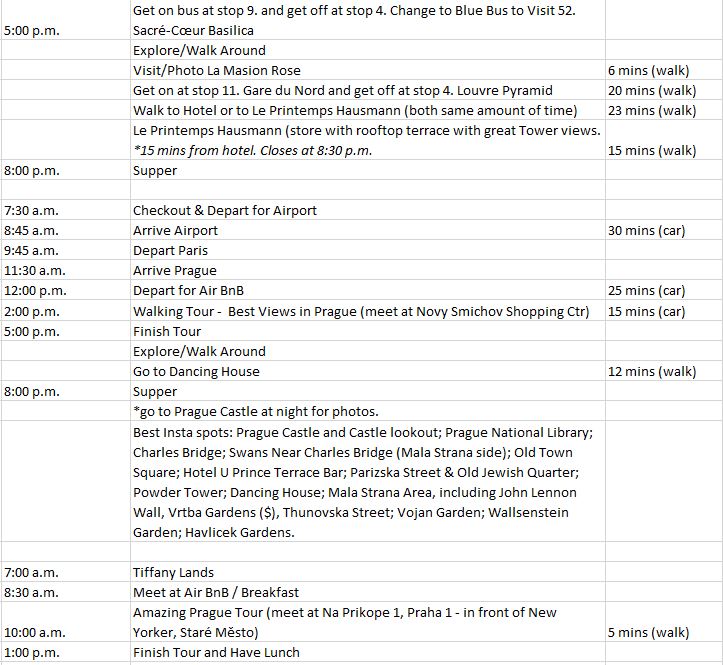
Another piece of advice you can get from reading Trip Advisor reviews and blog posts is whether or not you need a guided tour; for attractions or a city as a whole. Personally, I like to take “city tours” in every city that I visit, because I like to have some knowledge about the places that I visit. There are plenty of places to book tours; Trip Advisor, Get Your Guide and now Air BnB offers “experiences” as well as accommodations. I’ve booked tours from all three before and have never had any issues. There’s a lot more you can choose from, I’m just recommending ones I’ve personally used. There are so many tours, even for the same attraction, so you really need to put time and effort into checking what’s included (i.e. how many stops/attractions, lunch, drinks, etc.) and the length of the tour for the price. Just because a tour is more expensive, doesn’t mean it provides the same level of service or visits more attractions than the cheaper one(s)! Doing your research also helps you determine when you should book your excursions, tours or tickets. A lot of websites will tell you that tickets sell quickly and you shouldn’t wait to book them. Another thing to watch out for is if/when attractions are closed. While doing research for an upcoming trip to Paris, I found out that a lot of sites are closed on Mondays (who knew, right?). We just happen to be getting there on a Monday; but luckily, we’re still able to see everything we want, because we plan to visit other attractions on Monday that are open. We had to alter our original plan, but we still get to see the major attractions that we really want to visit.
To tell you the truth, making itineraries and researching trips would be an absolute dream job for me. So, if you read through this and still don’t feel confident enough to tackle your first large (or small) itinerary, or have any questions, leave a comment or send me an email, and I’ll be glad to help you!
Join My Mailing List!
You’ll receive monthly emails to keep you up to date on new adventures and helpful tips!
 Amy’s Adventures
Awesome tips and easy read. Thanks ! Look forward to hearing more about your experiences !
LikeLike
Can’t wait to start writing about them!
LikeLike